

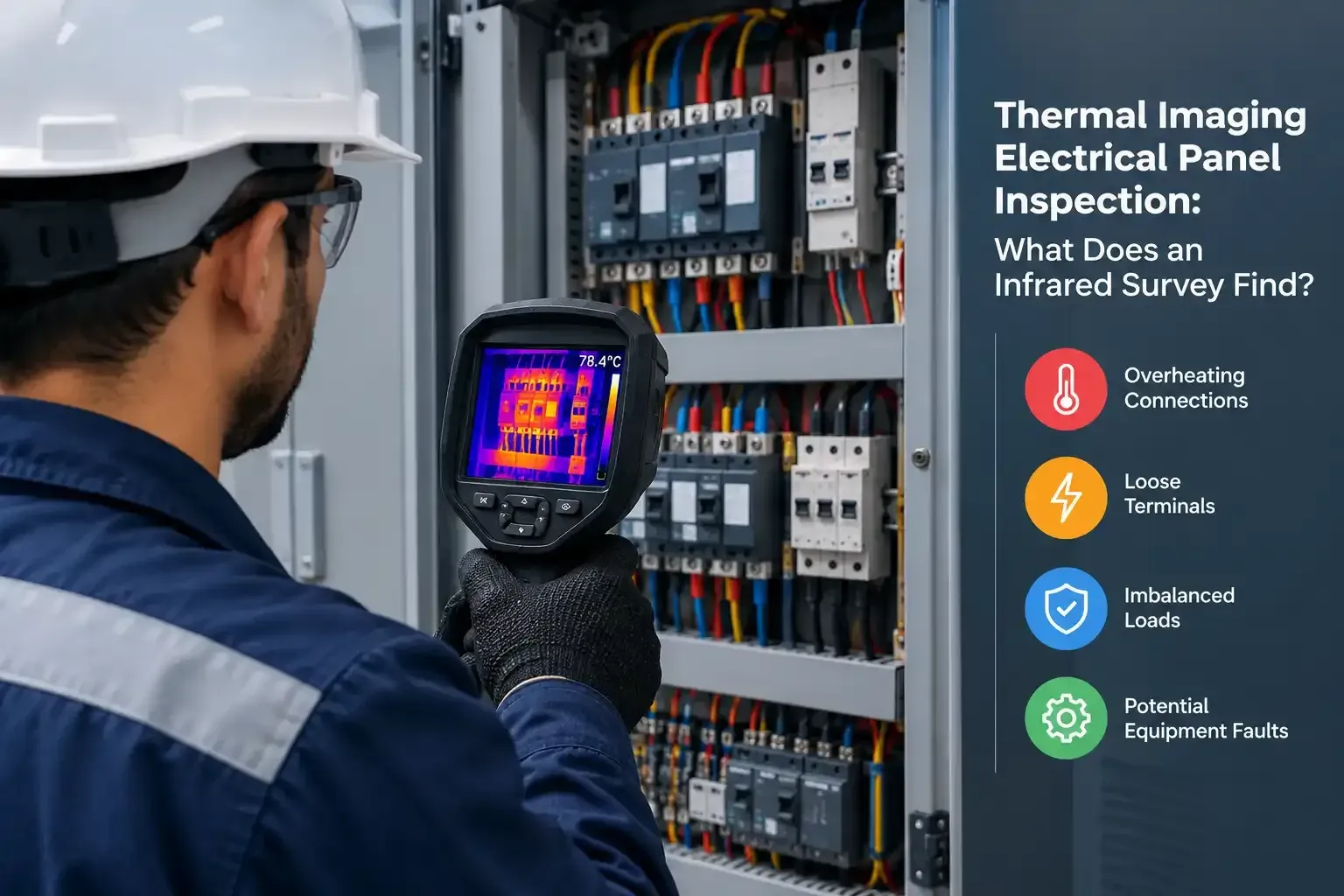
Thermal imaging electrical panel inspection finds the overheating connection that is quietly heading toward your next outage, fire or failed audit. Heat is the earliest warning that an electrical component is failing, yet the naked eye cannot see it.
Plant managers, maintenance engineers and safety teams across Saudi Arabia use infrared cameras to see that heat while equipment stays energised. This guide explains what an infrared survey electrical panel check finds, how it works and how to turn the results into action.
Quick answer: a survey typically finds loose connections, overloaded circuits, phase imbalance, worn breakers and contactors, and degraded busbars. It finds them before they fail.
What Is a Thermal Imaging Electrical Panel Inspection?
A thermal imaging electrical panel inspection uses an infrared camera to measure surface temperatures across panels, breakers, busbars and terminations. The principle is simple. Resistance creates heat, so a loose or corroded joint runs hotter than the joints around it. The camera turns that difference into a colour image.
This kind of thermographic inspection electrical teams rely on is non-contact. Technicians scan live equipment from a safe distance, so production keeps running. Panels are not shut down, and no one has to guess where the fault might be.
What an Infrared Survey Finds Inside Electrical Panels
An infrared survey rarely finds “random” problems. It finds a short list of repeat offenders.
Loose Connection Thermal Imaging: The Most Common Finding
Loose connection thermal imaging catches the number-one cause of electrical overheating. Vibration, thermal cycling and poor torque loosen lugs and terminals over time. Resistance rises, heat builds and insulation breaks down.
Typical locations include:
- Breaker and fuse terminations
- Busbar joints and bolted connections
- Motor starter and contactor lugs
- Terminal blocks and cable crimps
Overloaded Circuits and Phase Imbalance
A cable or breaker running hotter than its peers often signals an overload. When one phase runs hotter than the other two, the cause may be an imbalanced load or a degraded contact. Either way, the thermal image points to the exact component.
Failing Breakers, Contactors and Fuses
Worn contacts and ageing protective devices heat up long before they trip or weld shut. Spotting them early lets you replace one part on a planned shutdown instead of a whole section after a fault.
Illustrative Example
Imagine a pump starter panel at a processing site. Under normal load, one phase lug reads far hotter than the other two. The connection is re-torqued during the next planned window, and the hot spot disappears on the follow-up scan. Without the survey, that lug could have burned through and tripped the pump mid-production.
Thermal Imaging Switchgear Inspection: Higher Stakes, Higher Value
Switchgear feeds entire process units, so a failure there is never small. A thermal imaging switchgear inspection checks bus joints, cable compartments, breakers and transformer terminations in medium and low voltage gear.
Many switchgear faults develop behind closed doors. Technicians therefore use infrared windows where fitted, or open panels under strict safety procedures. That makes planning and qualified personnel essential. For critical gear, this is where a thermal imaging electrical panel inspection pays for itself fastest.
Electrical Panel Hot Spot Detection: How Severity Is Rated
Finding heat is only half the job. Electrical panel hot spot detection also means judging how serious each hot spot is. Most programmes rate findings by the temperature rise over a similar component under similar load, then sort them into three bands:
- Monitor: a minor rise, rechecked at the next survey
- Repair soon: a clear rise, scheduled for the next planned outage
- Repair immediately: a major rise, treated as urgent
Load matters. A reading taken at low load can understate the problem, so surveys are best done at normal operating load, ideally 40 percent or more of rating.
How a Thermal Imaging Electrical Panel Inspection Works
A well-run thermal imaging electrical panel inspection follows a clear sequence:
- Scope and booking (24 to 48 hours): you share the panel list, locations and access rules. Most General Tech Saudi visits are scheduled within 24 to 48 hours of booking.
- Safety briefing (on arrival): technicians confirm permits, arc-flash precautions and protective equipment.
- Scanning (hours to a day): panels are scanned under normal load, with thermal and visible photos taken for each finding.
- Analysis (same day to a few days): temperature rises are compared against similar components and rated.
- Report and walkthrough (on completion): you receive a signed report with prioritised actions.
- Re-scan after repair: a follow-up scan confirms each fix worked.
Reading an Infrared Inspection Report
A good infrared inspection report is a work order, not a photo album. It should include:
- Panel and component identification
- Paired thermal and visible images
- Measured temperatures, load at the time and ambient conditions
- A severity rating for each finding
- Recommended actions and priority
This level of documentation also supports insurance and compliance audits, because it proves you inspected on a schedule and acted on what you found. After repairs, the same thermal imaging electrical panel inspection data becomes your baseline for the next survey.
Electrical Preventive Maintenance Thermography: How Often?
Electrical preventive maintenance thermography works best as a recurring programme, not a one-off check. Many sites survey critical panels at least once a year, and some add a mid-year scan for heavily loaded or high-risk gear.
Add an extra survey when:
- You have completed major repairs or added load
- A panel has a history of trips or overheating
- Equipment has run through a long, hot summer at high load
Thermography also complements other work. Pairing it with power quality analysis can reveal harmonics that overheat conductors. It fits neatly beside UPS preventive maintenance too, since both aim to catch failures before they hit critical loads.
Thermal Imaging Survey Saudi Arabia: Why Local Conditions Matter
A thermal imaging survey Saudi Arabia sites commission has to account for the climate. High ambient temperatures, dust and heavy summer loads push panels closer to their limits. Surveys should record ambient temperature and load so readings stay comparable year to year.
General Tech Saudi has served Saudi industry from Dammam since 1998. Our thermal imaging services detect electrical and mechanical faults using infrared cameras, and we also stock brands such as HIKMICRO and Raytek. As a thermal imaging service Saudi Arabia teams can book quickly, we cover Dammam, Jubail, Riyadh, Jeddah and Yanbu.
For thermal imaging electrical inspection Dammam plants need, our technicians are based locally, which shortens response times. If a survey exposes a failing drive, our VFD repair services can take it from finding to fix.
Frequently Asked Questions
What does a thermal imaging electrical panel inspection find?
It finds loose connections, overloaded circuits, phase imbalance, worn breakers and contactors, and failing busbar joints. It flags them by their heat signature before they cause an outage or fire.
Does the panel need to be shut down?
Usually not. The panel is scanned while energised and under normal load, which is exactly when faults show up as heat. Opening covers requires strict safety procedures.
How often should an infrared survey be done?
Many sites survey critical panels at least annually. High-load, high-risk or recently repaired equipment may need more frequent checks.
Can thermal imaging help with insurance and compliance audits?
Yes. A signed infrared inspection report documents that you inspected on schedule, rated each finding and repaired it. That evidence is exactly what auditors and insurers ask for.
Conclusion: Make Thermal Imaging Electrical Panel Inspection Routine
Heat gives every failing connection away long before it fails. A regular thermal imaging electrical panel inspection turns that early warning into planned, low-cost repairs instead of emergency shutdowns. Start with your most critical switchgear and panels, rate every finding, and re-scan after each fix.